

What is Laban/Bartenieff Movement Analysis (LMA/LBMS)?
Laban Movement Analysis (LMA/LBMS) originated in the work of Rudolf Laban, and has evolved into a highly detailed practical and theoretical system that describes qualitative aspects of movement and interrelationships among them – in dance, theatre, pedestrian movement, and other nonverbal behavior.
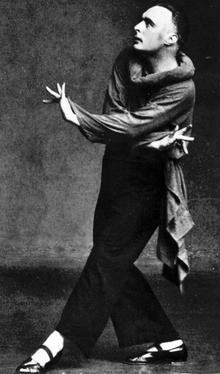
Rudolph Laban’s influence and life-work as a dance and movement theorist, performer, choreographer, and educator, is considered a keystone in the development of early European Modern Dance. Before the outbreak of WWII, there were Laban Schools headed by his pupils throughout Europe; and other former students such as Mary Wigman, Kurt Joos, and Sigurd Leeder opening schools with new styles of performance and methodologies of training – each of whom continuing Laban’s influence into the next generation of European artists (such as Pina Bausch).
Laban’s seminal work describing, defining, and developing movement-based knowledge further influenced theatre and dance education curriculum in the UK, where he fled during WWII. Here his work extended into assessment and movement training for factory workers during the War; training British physical education teachers in “Modern Educational Dance”; training acting teachers in fighting and character development; and working with Jungian-based therapists in developing a movement framework for psychological assessment and treatment.
 Exiled from Germany to the US in 1936, another former student of Laban’s, Irmgard Bartenieff, further articulated and promulgated Laban’s work in the field of dance and movement training, physical therapy, and dance/movement therapy in the US. Warren Lamb, who worked with Laban in factory-observation and consulting in England, extended Laban’s work to management consulting and team development based on nonverbal behavior, until Lamb’s death in 2014.
The terms LMA or LBMS (Laban/Bartenieff Movement Analysis or Laban Bartenieff Movement Studies), infer that the Laban framework has been expanded beyond Laban’s initial two categories of movement description, Choreutics (Space Harmony) and Eukinetics (Effort). This expansion of Laban’s two original categories includes the category of Body – specifically through Bartenieff Fundamentals and other somatic practices – and the category of Shape, further developed by Bartenieff, Warren Lamb, and Judith Kestenberg.
LSSI programs utilize LMA/LBMS as a practice of the phenomenology of movement and mind, fostering awareness of observation as both a subjective and inter-subjective experience. Developing skills in movement analysis increases kinesthetic sensitivity within the observer, placing in the foreground those aspects of movement which are individual-specific, and within a particular context of movement. Movement Analysis as a system of observation assumes that a significant degree of individual freedom in movement quality is always present within biological, cultural, and contextually defined movement repertoires.
 Laban/Barteniff and Somatic Studies, International